


by Scott Olpin, on March 15, 2026
Every operations manager has faced the same conversation at some point: "We need more space." The instinct is to look outward — lease an adjacent unit, build a new wing, rent off-site storage. But before a single square foot of real estate gets added to the budget, there's a question worth asking first: Are you using the space you already have?
Most facilities aren't. They're using their floor, but not their building. And that distinction is exactly where vertical storage systems vs floor storage becomes one of the most consequential decisions in space optimization for facilities.
The Hidden Cost of Floor-Based Storage
Floor storage is the default. Shelving units, flat racks, pallets, bins — they spread outward, they're easy to access, and they require almost no planning to implement. That ease comes at a cost that rarely shows up on any one line item, but quietly inflates across the entire organization.
When storage grows horizontally, it competes with everything else that needs floor space: workflow corridors, staging areas, equipment, personnel movement, and future operational needs. Facilities that rely exclusively on floor-based storage tend to reach a functional ceiling long before they run out of physical building. The floor fills up. Productivity slows. And the answer feels obvious — until someone looks up.
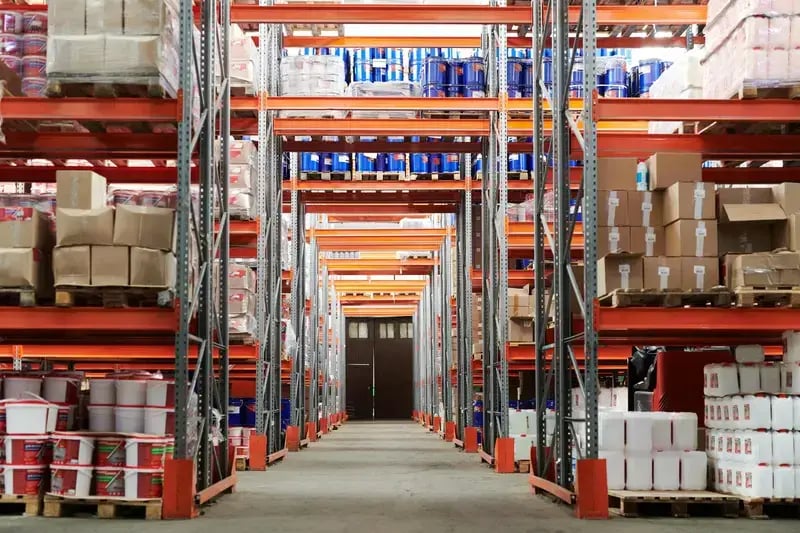
The vertical space above a typical storage floor is rarely maximized. Depending on the building, that can mean anywhere from 15 to 40 feet of completely unused cubic footage sitting above a sea of overstuffed shelving. Vertical storage systems exist specifically to reclaim that space.
What Vertical Storage Systems Actually Do
Vertical storage is not simply "taller shelving." The category encompasses a range of engineered systems — vertical carousels, vertical lift modules (VLMs), mobile high-density shelving, mezzanine platforms, and purpose-built lifts for specific asset types — all designed around a shared principle: move inventory up, not out.
The operational shift is significant. In a traditional floor storage model, workers travel to inventory. In a vertical storage model, inventory travels to workers. That inversion reduces pick times, minimizes aisle requirements, and compresses what might have been thousands of square feet of floor space into a single, densely organized vertical footprint.
Across industries, the space recovery numbers are striking. Facilities implementing vertical storage systems routinely reclaim 40 to 80 percent of their previous floor footprint — without moving walls, adding square footage, or expanding operations offsite. In high-cost real estate markets, that reclaimed space has direct dollar value. In healthcare, manufacturing, or distribution environments, it has operational value that compounds over time.
Where the Difference Shows Up: Industry by Industry
Healthcare
Hospital and clinic environments are among the most space-constrained in any built environment. Clinical space is expensive, regulated, and finite. Equipment like hospital beds, stretchers, and large mobile assets can consume enormous amounts of floor space when stored conventionally — space that competes directly with patient care functions.
Vertical lift systems designed specifically for hospital bed storage solve this problem at scale. Rather than dedicating entire corridors or rooms to stacked beds and frames, facilities can store the same inventory in a fraction of the floor footprint. Olpin Group's hospital bed storage lifts represent exactly this kind of purpose-built vertical solution — designed around the specific dimensions, weight requirements, and retrieval workflows of healthcare facilities.
Manufacturing and Distribution
In manufacturing environments, the relationship between storage and production floor space is zero-sum. Every square foot of floor dedicated to raw material or finished goods storage is a square foot unavailable for production. Vertical storage systems decouple that relationship by stacking inventory upward, freeing production floor to expand without a building expansion.
Distribution environments face a similar calculus, with the added complexity of SKU count, pick frequency, and throughput requirements. Vertical lift modules excel in these settings because they bring high-demand inventory directly to the operator, cutting pick walk time and improving accuracy.
Commercial and Office Environments
Document storage, supply management, and equipment storage in commercial office environments create chronic floor space pressure that tends to be addressed with off-site storage — a recurring expense that often grows year over year. Vertical storage systems provide a cost-effective alternative that keeps frequently needed materials on-site and accessible while dramatically reducing the floor footprint those materials previously required.
The Storage System Design Decision
Choosing between vertical storage and floor-based approaches isn't a single decision — it's a design process. The right answer depends on ceiling height, inventory type, retrieval frequency, workflow patterns, and facility layout. A distribution center with 30-foot ceilings and high SKU variability has different needs than a hospital wing managing large mobile equipment.
That complexity is why storage system design matters as much as product selection. The same vertical lift module that transforms a manufacturing parts room can be wrong-sized, wrong-placed, or under-utilized in a different context. Good storage design starts with a clear picture of what's being stored, how often it's accessed, and what operational outcome the facility actually needs.
Olpin Group's full product portfolio covers this range of vertical and space-optimized storage categories, from high-density mobile shelving to purpose-built vertical lifts, designed to match specific operational contexts rather than apply a one-size solution.
For facilities with genuinely complex or unusual storage challenges — non-standard dimensions, specialized assets, regulatory requirements, or high-mix inventory — off-the-shelf systems often fall short. That's where custom storage solutions become the more practical path, engineering a system around the facility rather than trying to adapt the facility around a system.
The Business Case for Going Vertical
The ROI conversation around vertical storage systems tends to start with space recovery but rarely ends there. The full business case typically includes:
Deferred real estate cost. If floor space was running short and an expansion was being evaluated, the recovered square footage from a vertical system directly offsets that capital expense.
Operational efficiency. Reduced pick times, fewer movement errors, and better inventory visibility translate into measurable labor savings over time.
Asset protection. Purpose-built vertical storage protects stored inventory from damage, reduces retrieval-related wear, and — in healthcare and regulated industries — supports compliance with storage and handling requirements.
Scalability. Vertical systems grow with the operation more predictably than floor-based expansion. Adding capacity means adding height or modules, not reconfiguring entire floor layouts.
Real estate optionality. In leased environments, reclaimed floor space can be subleased, repurposed, or simply held in reserve for operational growth — all of which convert storage efficiency into financial flexibility.
Starting the Conversation
The most common obstacle to vertical storage adoption isn't budget — it's not knowing where to start. Facilities that have operated with floor-based storage for years have usually organized workflows, staffing, and expectations around that model. Shifting to vertical storage requires a different kind of space planning conversation, one that begins with current utilization data and ends with a system designed around actual operational needs.
That conversation is worth having before the next "we need more space" moment arrives. The space may already be there — it's just above everyone's head.
Interested in evaluating vertical storage options for your facility? Explore Olpin Group's product solutions, learn about hospital bed storage lifts, or connect with the team about custom storage solutions designed for your specific environment.